Image 1 of 1
Mediation Coaching and Court Room Etiquette
Mediation Coaching
Focused, practical preparation for fathers entering mediation to resolve custody, parenting time, and support issues.
Coaches help clarify goals, prioritize children’s best interests, translate legal options into workable agreements, and develop negotiation strategies.
Teaches effective communication skills: active listening, de-escalation, assertive (not aggressive) expression, and staying child-centered.
Prepares fathers for common mediation scenarios, paperwork, timelines, and how to present evidence or concerns calmly and persuasively.
Emphasizes realistic outcomes, contingency planning, and when to pause mediation and seek legal advice.
Courtroom Etiquette for Fathers
Dress and demeanor: wear conservative, neat clothing; be punctual, respectful, and composed.
Addressing the judge and court staff: stand when speaking, address the judge as "Your Honor," and follow courtroom directions without argument.
Communication: speak clearly, stick to facts, avoid emotional outbursts, and answer questions directly and succinctly.
Document handling: bring organized copies of evidence, exhibits, and timelines; label materials and provide extras for the judge and opposing counsel if required.
Behavior with the other parent and attorneys: refrain from interruptions, hostile gestures, or side conversations; let attorneys handle objections and legal points.
Technology and phones: silence or turn off devices; do not record or photograph in court without permission.
Child-focused posture: emphasize the child’s needs and stability; avoid disparaging the other parent and focus on constructive proposals.
After the hearing: follow court orders promptly, consult your attorney about next steps, and maintain professionalism in all follow-up communications.
Services given on a per hour basis. If you need financial assistance, we got you! Just fill out the intake forms attached and tell us your story, 1 page (MAX) please.
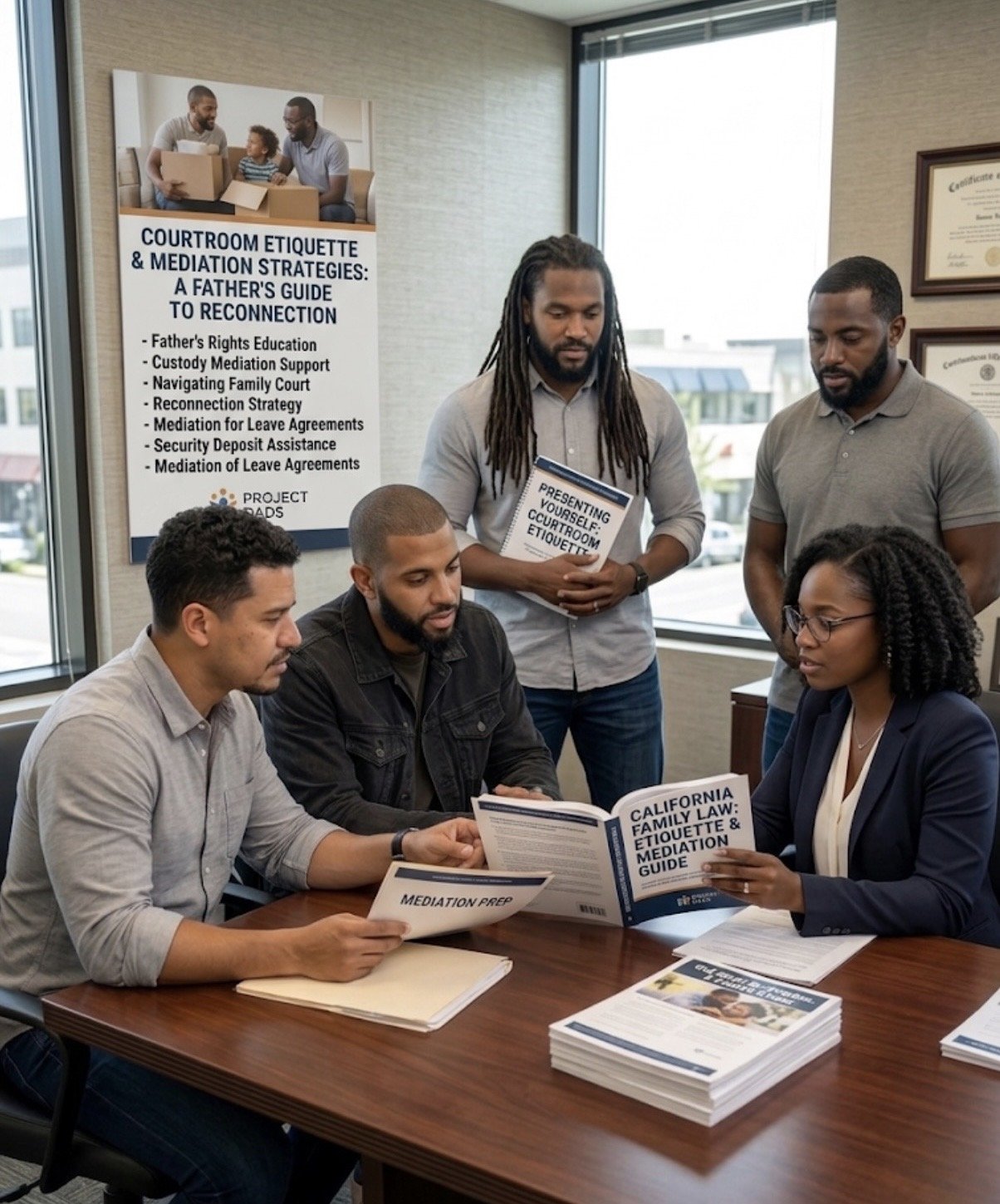
Mediation Coaching
Focused, practical preparation for fathers entering mediation to resolve custody, parenting time, and support issues.
Coaches help clarify goals, prioritize children’s best interests, translate legal options into workable agreements, and develop negotiation strategies.
Teaches effective communication skills: active listening, de-escalation, assertive (not aggressive) expression, and staying child-centered.
Prepares fathers for common mediation scenarios, paperwork, timelines, and how to present evidence or concerns calmly and persuasively.
Emphasizes realistic outcomes, contingency planning, and when to pause mediation and seek legal advice.
Courtroom Etiquette for Fathers
Dress and demeanor: wear conservative, neat clothing; be punctual, respectful, and composed.
Addressing the judge and court staff: stand when speaking, address the judge as "Your Honor," and follow courtroom directions without argument.
Communication: speak clearly, stick to facts, avoid emotional outbursts, and answer questions directly and succinctly.
Document handling: bring organized copies of evidence, exhibits, and timelines; label materials and provide extras for the judge and opposing counsel if required.
Behavior with the other parent and attorneys: refrain from interruptions, hostile gestures, or side conversations; let attorneys handle objections and legal points.
Technology and phones: silence or turn off devices; do not record or photograph in court without permission.
Child-focused posture: emphasize the child’s needs and stability; avoid disparaging the other parent and focus on constructive proposals.
After the hearing: follow court orders promptly, consult your attorney about next steps, and maintain professionalism in all follow-up communications.
Services given on a per hour basis. If you need financial assistance, we got you! Just fill out the intake forms attached and tell us your story, 1 page (MAX) please.